
Ritus is now an iPhone appDownload

Cold Brew

Discover Cold Brew, a cold extraction method that produces a smooth, sweet, and refreshing beverage, perfect for warm days.

Cold Extraction

Cold Brew is a brewing method that uses cold or room-temperature water to extract coffee over many hours. Unlike iced coffee (hot coffee cooled down with ice), Cold Brew never comes into contact with hot water, which fundamentally changes the extraction chemistry.

There are no exact records of Cold Brew's origin, but the most widespread account in the coffee world traces it back to the 17th century, when Dutch traders reportedly developed a cold coffee concentrate to preserve the beverage during long sea voyages to Japan. The idea was to rehydrate it before consumption, a kind of ancestor to instant coffee, according to Henrique Ortiz, barista and coffee hunter at Catarina Coffee and Love 4. In Brazil, the first bottled cold brew was developed by Ton Rodrigues of True Coffee Inc 4.

Scientifically, the low water temperature reduces the solubility of certain acids and bitter compounds. Research from the UC Davis Coffee Center confirmed that Cold Brew consistently has a higher pH, meaning it is indeed less acidic, and is perceived as more floral and less bitter in controlled sensory analysis 1.

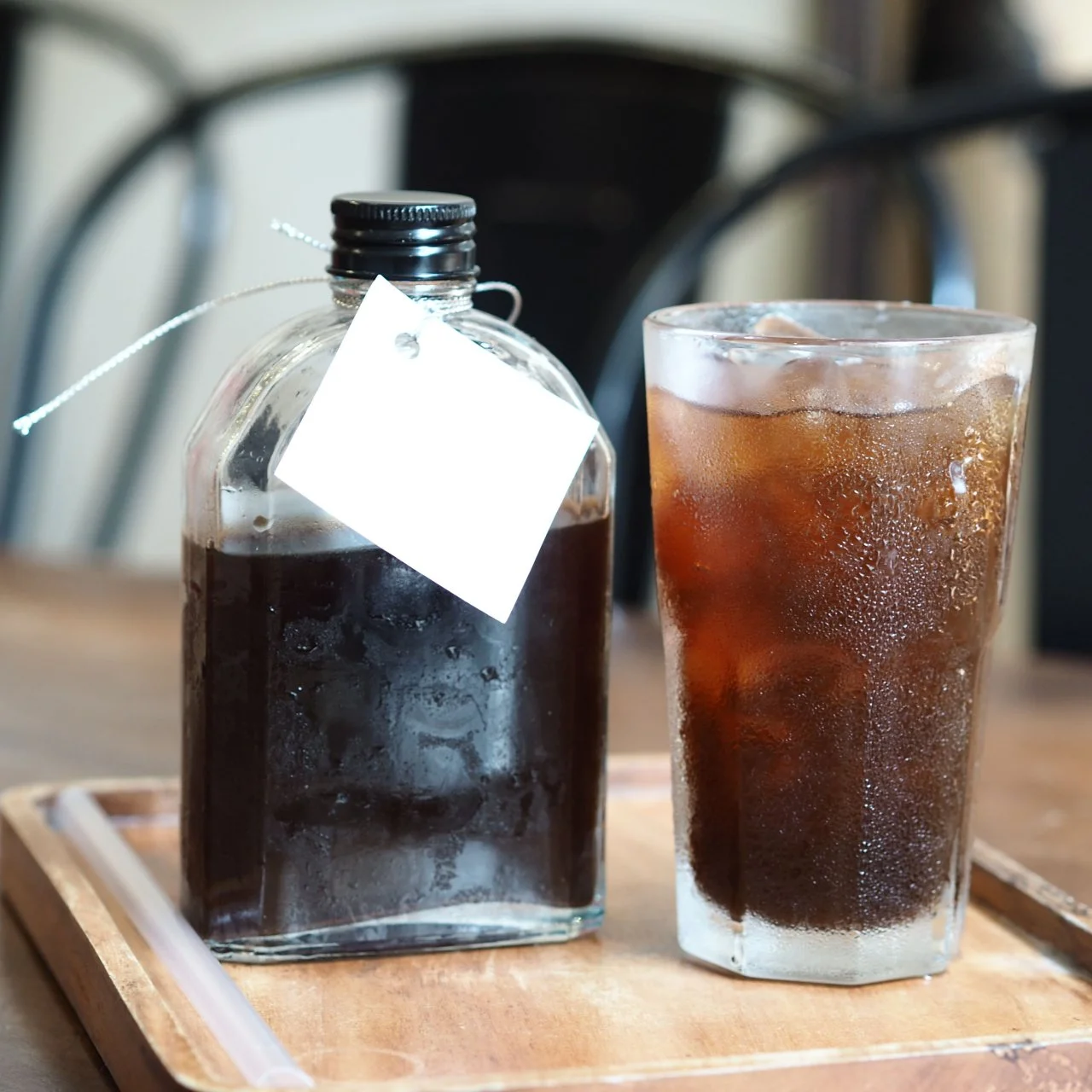
Cold Brew being prepared

Ratio

1:10 for concentrate (100g coffee to 1L water). Dilute to taste before serving.

Temperature

Room temperature water (~22°C / 72°F) or refrigerated (~4°C / 39°F). Never hot water.

Steep Time

12 to 24 hours. Ambient: ~12h to equilibrium. Fridge: ~36h.

Grind

Coarse, similar to French Press or coarse sea salt.

Step-by-Step Technique

  1. 01

    Weigh and Grind the Coffee

    Weigh your desired amount of coffee and grind it coarse, similar to coarse sea salt or raw sugar. For 1 liter of concentrate, use 100g of coffee.

    Tip: Coarse grinding is essential: too fine a grind causes over-extraction and bitterness, and makes filtering difficult.

  2. 02

    Add the Water

    Place the ground coffee in a clean container (glass jar, French Press, or Toddy) and add room-temperature water. The ratio is 1:10 (coffee to water).

    Tip: Use good quality filtered water. Light mineral water or activated carbon-filtered water are good options.

  3. 03

    Stir Gently

    With a spoon, stir gently to ensure all the coffee makes contact with the water. Vigorous stirring is not necessary.

    Tip: Make sure there are no dry pockets of coffee, all grounds should be saturated.

  4. 04

    Cover and Wait

    Cover the container with a lid or plastic wrap to prevent contamination. Let it steep for 12 to 24 hours, in the fridge or at room temperature.

    Tip: In the fridge, extraction is slower and more delicate (prefer 18-24h). At room temperature, 12h is usually sufficient to reach extraction equilibrium.

  5. 05

    Filter the Concentrate

    After the steeping time, filter the liquid to separate the grounds. See the filters section below to understand your options.

    Tip: Filtering can be slow. Be patient, forcing it pushes fines into the liquid and clouds the brew. A double filtration (cloth + paper) removes almost all sediment.

  6. 06

    Dilute and Serve

    The result is a concentrate. Dilute with cold water, milk, or plant-based milk at a 1:1 to 1:2 ratio (concentrate to diluent), adjusting to your taste. Serve over ice.

    Tip: Store the concentrate in the fridge in a sealed container for up to 2 weeks.

Classic Recipe (Concentrate)

Coffee
100g
Water
1,000ml
Temperature
Room temp (~22°C)
Time
12-24h

Timeline:

0:00 - Add ground coffee and water100g + 1L
0:02 - Stir gently and cover-
12-24h - Filter the concentrate-
After filtering - Dilute 1:1 to 1:2 and serve over ice-

Unique Characteristics

Versatility

The concentrate can serve as a base for coffee cocktails like coffee tonic, coffee cola, or simply diluted with milk or cold water.

Convenience

Brew once and have coffee ready for up to 2 weeks. Ideal for daily routines, travel, or serving multiple people.

Tips for Perfect Cold Brew

Coffee Selection

Coffees with chocolate, caramel, and dried fruit notes work very well. Medium to medium-light roasts preserve sweetness.

Water Quality

Water makes up over 90% of the beverage. Use filtered or light mineral water, avoid water with high chlorine or heavy mineral content.

Steep Time

Adjust time to your taste: less time (12h) for more lightness and subtle acidity, more time (24h) for more body and intensity.

Cold Brew vs. Iced Coffee

These are different beverages. Cold Brew is extracted cold from the start; Iced Coffee is hot coffee poured over ice. Both are valid, the choice is sensory.

Required Equipment

Steeping Vessel

Any container with a lid that allows prolonged immersion: glass jar, airtight container, French Press (use the plunger only for filtering at the end), or a Toddy (a dedicated Cold Brew system with an integrated felt filter).

Grinder

Coffee grinder (manual or electric) capable of a coarse, uniform grind.

Filter

There are several filtering options, each producing a different result. See the filters section below.

Scale

To weigh coffee precisely and maintain consistent ratios between brews.

Cold Brew Filter Guide

Filtering is a crucial step in Cold Brew. Each filter type produces a different result in terms of clarity, body, and prep time. Here are the main options:

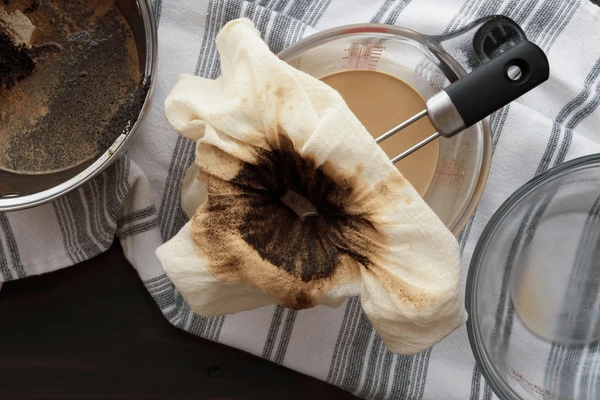
Cheesecloth folded in layers over a sieve

Cheesecloth

A loosely woven cotton fabric, sold in rolls at grocery stores or kitchen supply shops. For Cold Brew, fold it in 2-3 layers and place over a sieve or funnel. The most accessible and easy-to-find filter option.

+ Cheap, disposable, easy to find, fast filtering

− Lets more fines (sediment) through, less clean result

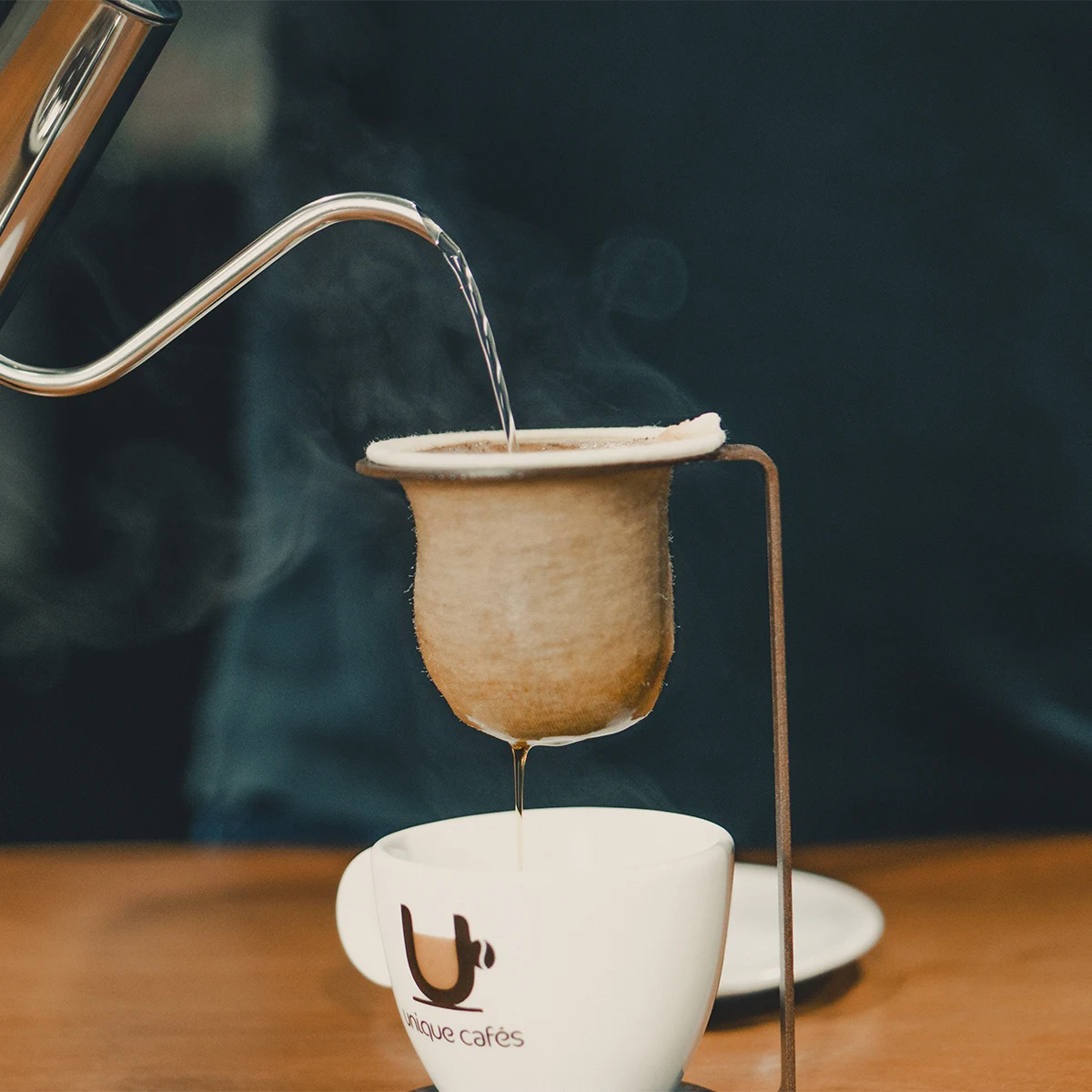
Reusable cloth coffee strainer with metal ring

Cloth Strainer

A reusable fabric filter bag, often called a "sock filter" or "cloth dripper." Common in Brazilian and Asian coffee traditions. The denser fabric catches more fines than cheesecloth.

+ Reusable, good balance of clarity and body, affordable

− Needs thorough washing after each use to prevent oil buildup and off-flavors

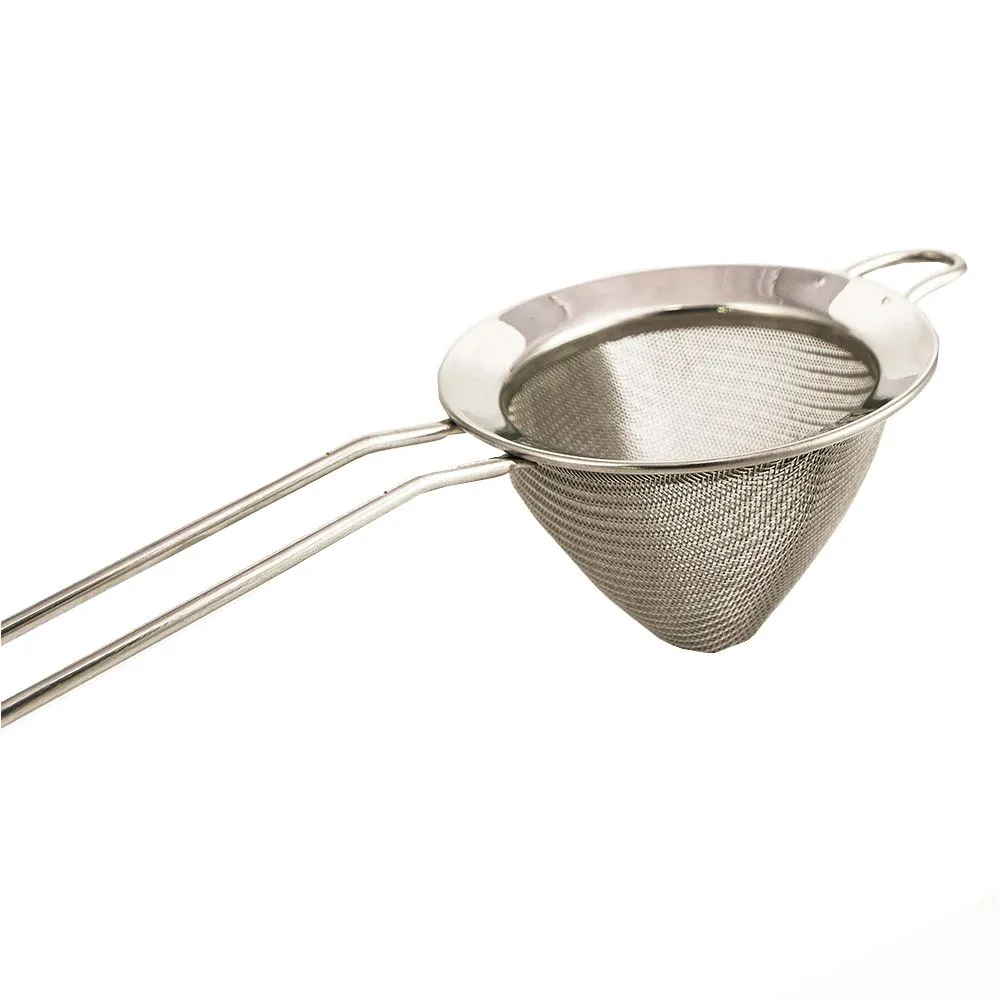
Fine metal mesh sieve filtering Cold Brew

Fine-Mesh Sieve

A kitchen sieve with fine metal mesh. Useful as a first filtration step to catch the coarse grounds before a second pass through cloth or paper.

+ Durable, easy to clean, great for pre-filtering

− On its own, lets too much fine sediment through

Cone paper filter being used to filter Cold Brew

Paper Filter

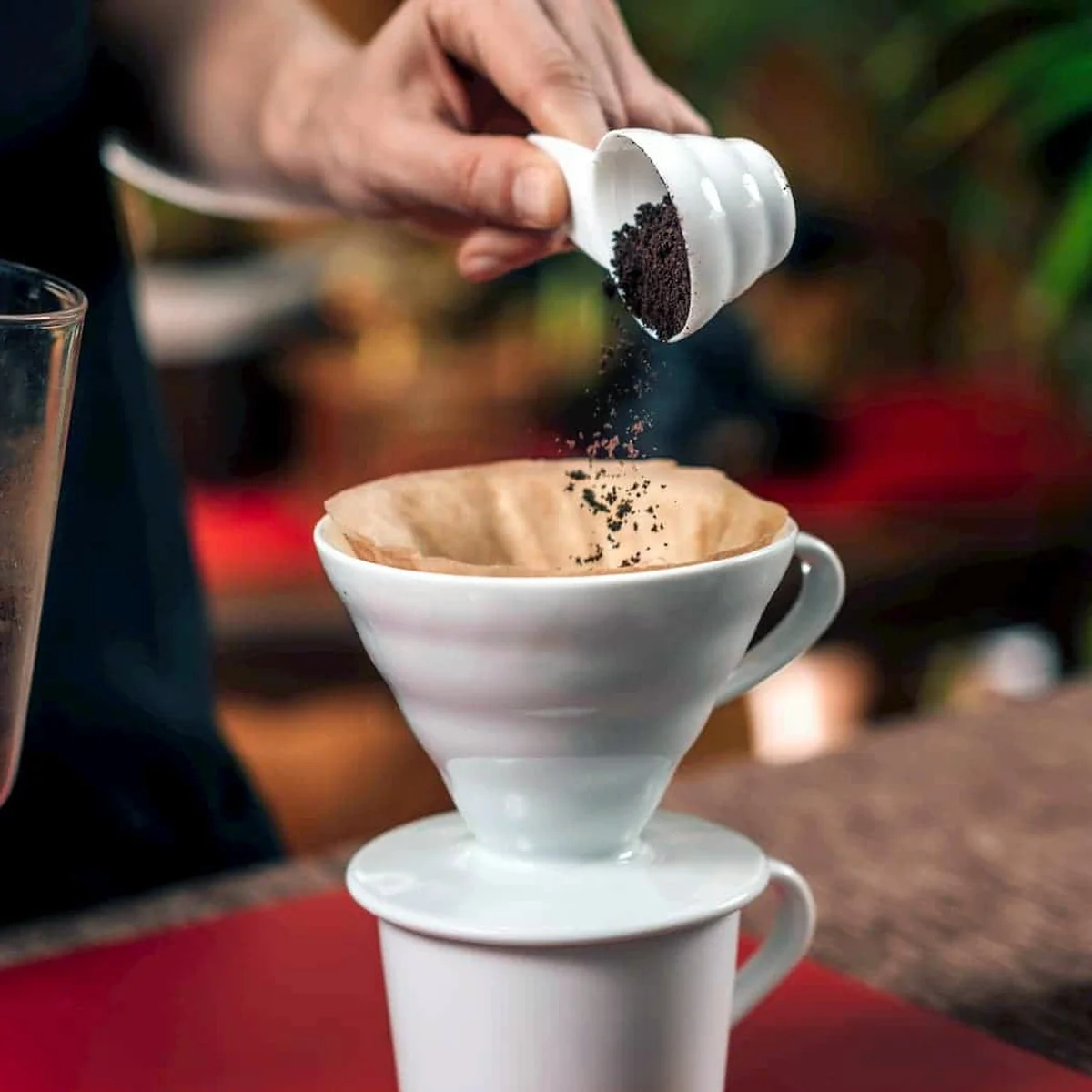
The same paper filters used in pour-over methods like V60, Melitta, or Kalita. Produces the cleanest, most crystal-clear result. The catch: they clog quickly with coarse Cold Brew grounds. Best used as a second step, after straining through cloth first.

+ Cleanest possible result, removes oils and all sediment

− Clogs easily if used alone, disposable

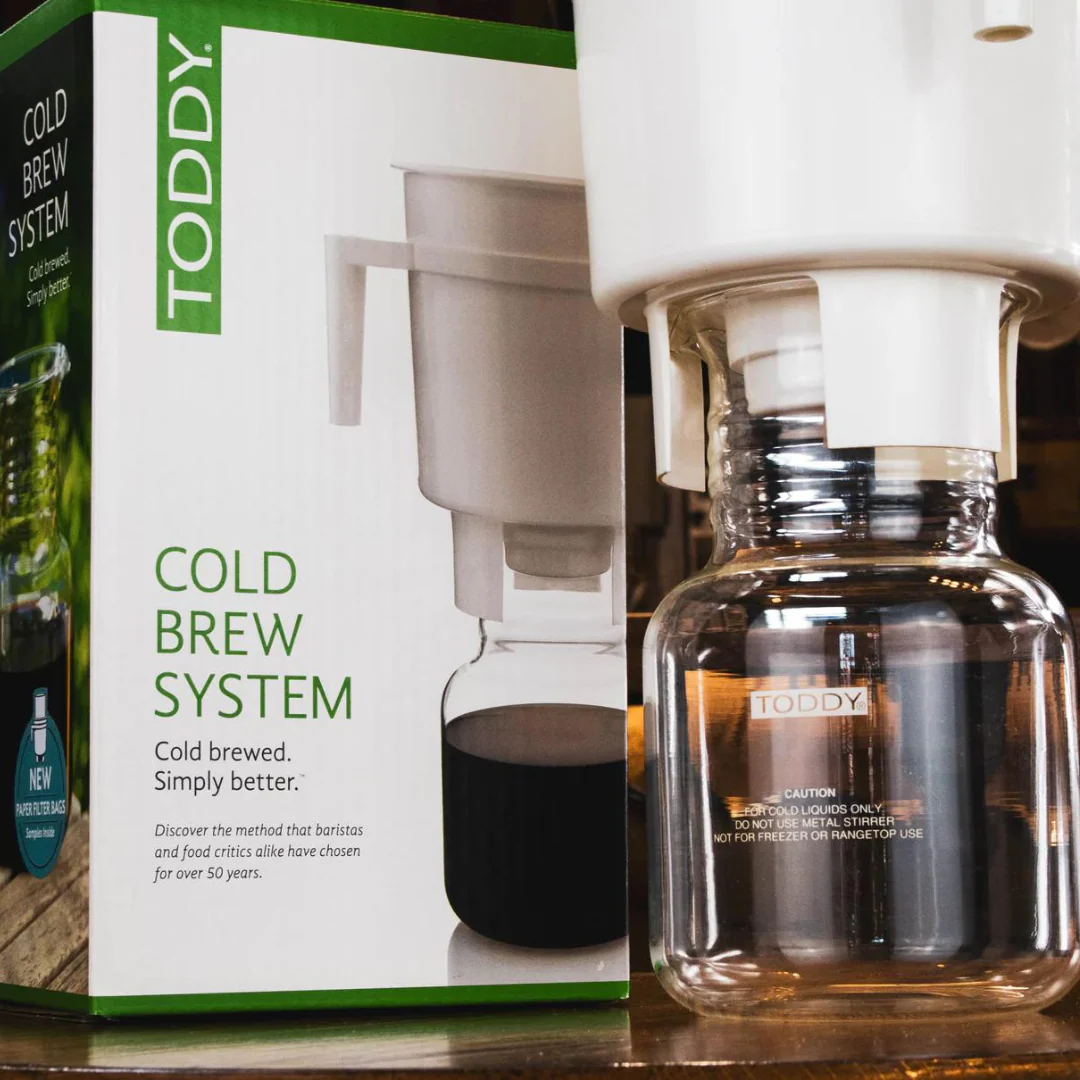
Toddy Cold Brew System with decanter and felt filter

Toddy Cold Brew System

The Toddy is a system created in the US in the 1960s, designed specifically for making Cold Brew. It consists of a plastic brewing container with a valve at the base and a thick, reusable felt filter. You add coffee and water, wait for the steep time, then open the valve: the filtered liquid flows directly into a glass decanter.

+ Complete system, reusable felt filter, practical and consistent

− More expensive upfront, filter needs replacing every ~10 uses

French Press being used to filter Cold Brew

French Press

If you already have a French Press at home, it works well for Cold Brew. Add coffee and water, steep, then push the metal plunger down to press the grounds to the bottom. The metal mesh retains coarse grounds but lets oils and fines through.

+ Already in your kitchen, total convenience, preserves body and oils

− Cloudier result, some sediment at the bottom of the cup

The Science Behind Cold Brew

Much of what's said about Cold Brew is based on personal experience and marketing. In recent years, however, the UC Davis Coffee Center, with support from the Coffee Science Foundation and the Specialty Coffee Association, conducted a series of rigorous studies that, for the first time, systematically investigated what happens when we extract coffee cold. The results confirm some popular beliefs, debunk others, and reveal nuances that rarely appear on packaging.

Acidity and Sensory Profile

The most widespread claim about Cold Brew is that it's "smoother and less acidic." To test this in a controlled way, Dr. Mackenzie Batali and the UC Davis team designed a study with 27 samples, three coffees from distinct origins (El Salvador honey, Ethiopia washed, Sumatra wet-hulled), roasted to three levels (light, medium, dark), and brewed at three temperatures (4°C, 22°C, and 92°C). All samples were brewed to extraction equilibrium and diluted to the same TDS (2%) to ensure a fair comparison 1.

The result: Cold Brew did indeed have a consistently higher pH than hot coffee, meaning it is less acidic. In a sensory panel with 14 trained evaluators (1,134 total evaluations), hot coffee was perceived as more "bitter," "sour," and "rubbery," while Cold Brew was more "floral" 1. Interestingly, panelists detected no sensory differences between Cold Brew made in the fridge (4°C) and at room temperature (22°C), good news for anyone seeking convenience, since room temperature reaches equilibrium in ~12 hours versus ~36 hours in the fridge.

There's an important caveat, though: while the differences by extraction temperature are real and measurable, they were considerably smaller in magnitude than the differences caused by the coffee's origin and roast level. In other words, the quality and choice of coffee matters more than the brewing method itself 1.

Extraction Equilibrium

One of the most relevant findings for home Cold Brew enthusiasts comes from the theoretical model developed by Jiexin Liang and colleagues. In full immersion, coffee extraction reaches an equilibrium, a point where TDS stabilizes and no longer increases, even if the coffee remains in contact with water. At equilibrium, the extraction yield (E) hovers around 21%, regardless of the coffee-to-water ratio 2.

What changes with the brew ratio is the final TDS: more water results in lower TDS, and vice versa. But the extraction yield stays constant. This means that, in practice, the main way to control your Cold Brew's intensity is to adjust the ratio, not the time or grind size 2.

Another surprising finding: hot water (92°C) reached equilibrium in ~1 hour, with TDS of 4.27% and EY of 22.28%. Room temperature (22°C) needed ~12 hours (TDS 3.98%, EY 20.74%), and refrigerated water (4°C) needed ~36 hours (TDS 3.76%, EY 19.55%). The difference in EY between cold and hot suggests that certain molecular compounds in coffee simply don't dissolve at low temperatures, even given unlimited time, which partially explains Cold Brew's smoother, less bitter profile 2.

Color in the Cup

During their Cold Brew experiments, researcher Sara Yeager noticed something unexpected: samples brewed cold and hot, even when diluted to the same TDS, had visibly different colors. This led to an investigation that produced 243 unique brews and revealed a consistent pattern: Cold Brews are more reddish, while hot coffees tend toward the classic dark brown-black 3.

In light roasts, the effect is most pronounced, a light roast Cold Brew can appear almost orange. The most likely explanation involves melanoidins, brown compounds formed during roasting via the Maillard reaction, which vary in size and have different solubilities depending on the extraction temperature. The color of the ground coffee, incidentally, does not directly predict the final beverage color 3.

This color difference isn't merely cosmetic. Prior research has shown that more reddish beverages may be perceived as sweeter and less bitter, a phenomenon scientists call the "crossmodal effect," where visual stimuli influence taste perception 3.

Each Coffee Responds Differently

Perhaps the most practical insight from all this research: different coffees respond differently to extraction temperature. Light roast coffees showed no additional sensory differences between Cold Brew and hot coffee beyond those already mentioned (more floral, less bitter). But at medium roast, hot coffee developed "burnt" and "whiskey" notes that didn't appear in Cold Brew. At dark roast, Cold Brew showed more "woody" notes 1.

By origin, the pattern also varies: Ethiopian coffee brewed hot had more perception of "burnt," while cold-brewed it was more "fruity." El Salvador cold-brewed showed more "woody" notes. Sumatra hot-brewed, more "smoky" 1. The practical takeaway is that it's worth experimenting with different origins and roasts specifically for Cold Brew, the profile that works for espresso or hot filter isn't necessarily ideal for cold extraction.

As Vagner Benezath, of Trentino Cafés Especiais, put it: "The quality of ingredients is absolutely essential, since this extraction method brings out sweetness and acidity very evidently. Without quality coffee and water, along with the right technique, you can't have a tasty beverage" 4.