
Coffee Terroir
Understand how geography, climate, and soil combine to create unique sensory profiles in each coffee region.
The Personality of Place
Terroir is a French concept that describes how the environment - soil, climate, altitude, topography - influences the flavor of agricultural products. In coffee, terroir is fundamental to understanding why coffees from different regions have distinct sensory characteristics.
Each coffee region in the world has a unique terroir that expresses itself in the sensory profile of the beans. Factors such as altitude, temperature, precipitation, soil type, and microclimate create specific conditions that directly influence the formation of sugars, acids, and aromatic compounds in coffee.
Understanding terroir allows specialty coffee enthusiasts to identify and appreciate the unique characteristics of each origin, creating a connection between place and flavor in the cup.
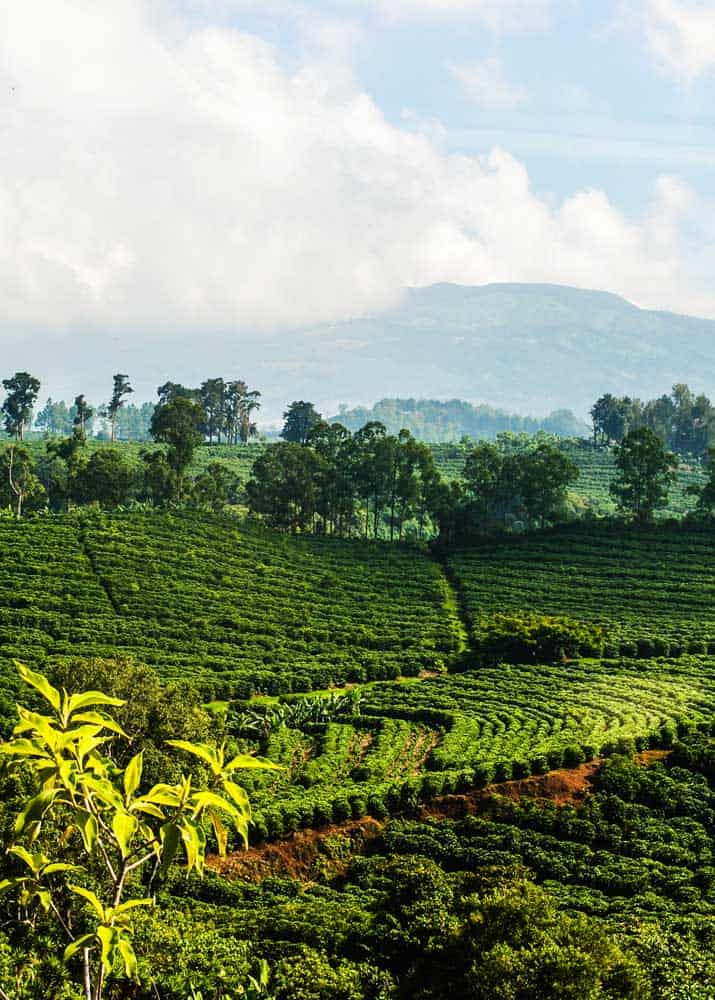
Altitude
At high altitudes (1000-2000m) temperatures are lower, ripening is slower and the fruit tends to build up more sugars and acidity.
Temperature
Daily thermal variations influence the development of aromatic compounds.
Precipitation
Rainfall patterns affect growth and flavor concentration in the fruit.
Soil
Mineral composition of the soil contributes to the nutritional and sensory profile of coffee.
Main Regions and Their Terroirs
| Region | Altitude | Soil | Profile |
|---|---|---|---|
| 🇪🇹 Yirgacheffe | 1700-2200m | Rich volcanic | Floral, tea, lemon, bergamot |
| 🇪🇹 Sidamo | 1400-2200m | Volcanic and sedimentary | Fruity, wine, complex |
| 🇪🇹 Harrar | 1500-2100m | Limestone and clay | Wine, red fruits, earthy |
| 🇰🇪 Kenya - Intense Acidity | 1400-2100m | Volcanic rich in phosphorus | Intense and bright acidity · Black currant notes · Full body · Long and complex finish |
| 🇨🇴 Huila | 1200-1800m | — | Sweet, caramel, tropical fruits |
| 🇨🇴 Nariño | 1500-2300m | — | Citric acidity, floral, complex |
| 🇨🇴 Cauca | 1400-2000m | — | Balanced, chocolate, fruits |
| 🇧🇷 Cerrado Mineiro | 800-1300m | — | Full body, chocolate, nuts |
| 🇧🇷 South of Minas | 800-1500m | — | Sweet, balanced, caramel |
| 🇧🇷 Mogiana | 900-1400m | — | Medium body, mild acidity, chocolate |
| 🇵🇦 Boquete | 1400-1800m | — | Intense floral, tea, bergamot (Constant mist) |
| 🇵🇦 Volcán | 1200-1600m | Rich volcanic | Complex, tropical fruits, floral |
Climate Factors
Temperature
Ideal temperatures between 18-24°C. Diurnal variations of 8-10°C favor the development of sugars and complex acids.
Precipitation
1200-1800mm annually well distributed, with a dry period during maturation for flavor concentration.
Luminosity
Sunlight filtered by mist or tree shade protects the fruits and allows slow and uniform ripening.
Soil Types
Volcanic
Rich in minerals, good drainage, slightly acidic pH. Common in Central America, Kenya and Ethiopia, regions often associated with bright acidity.
Limestone
Good drainage, rich in calcium. Found in some coffee regions. The direct influence of soil on flavor is still poorly proven; climate and altitude usually matter more.
Organic
Rich in organic matter, balanced moisture retention. Favors the development of complex aromatic compounds.
Let's learn more?