
Moka
Master the Italian coffee maker that produces concentrated and aromatic coffee, tradition in millions of homes.
Italian Tradition
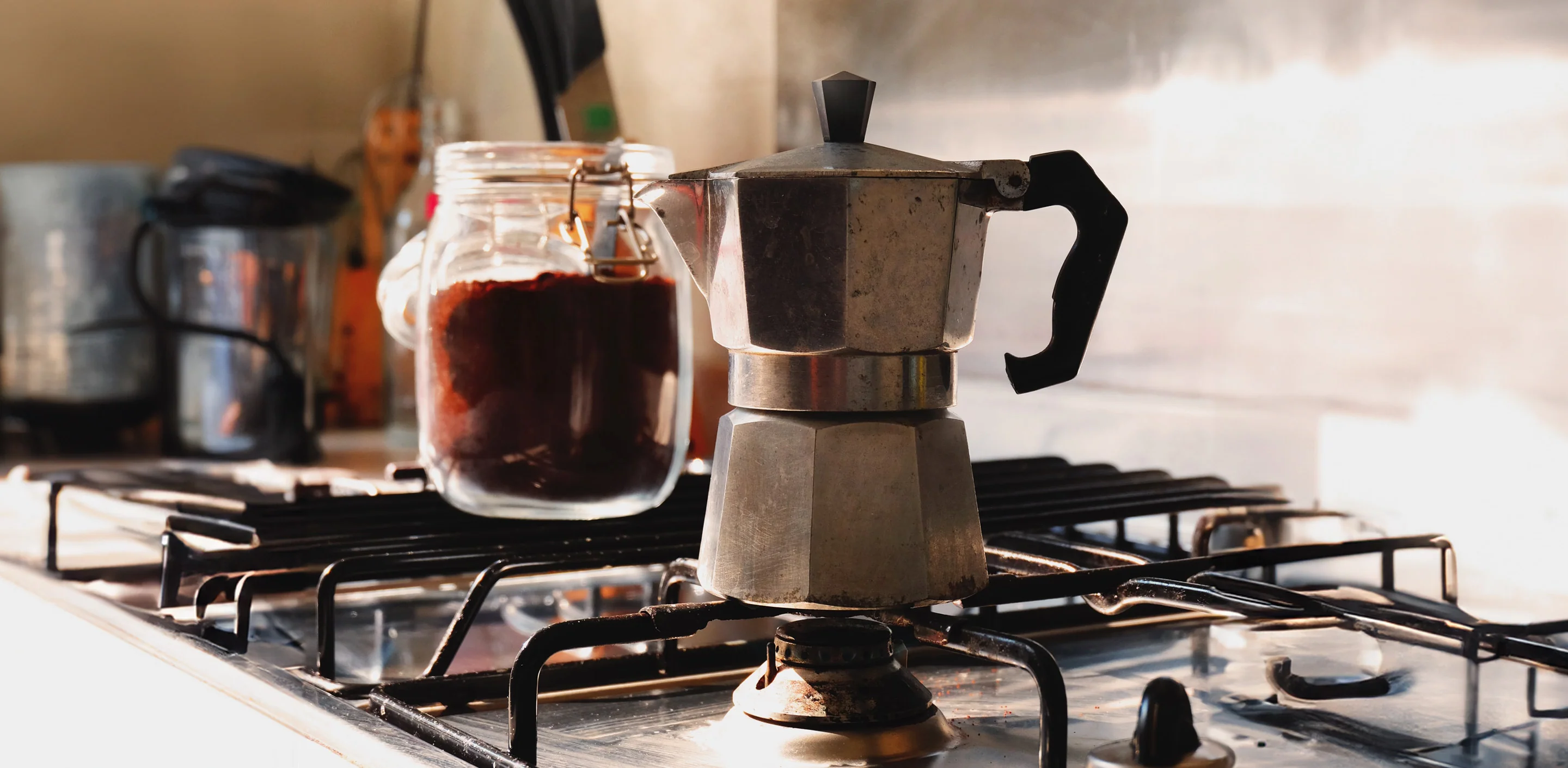
The Moka pot, also known as "Italian coffee maker" or "Bialetti" (its most famous brand), was designed in 1933 by Luigi De Ponti for Alfonso Bialetti's company and became an icon of Italian design and coffee culture.
Its operation is based on a simple principle: water vapor pressure forces hot water passage through ground coffee. Although generated pressure (1-2 bar) is lower than espresso machines (9 bar), the result is a concentrated and aromatic coffee.
Moka is appreciated for its practicality, durability, and ability to produce full-bodied coffee with intense notes. It's a method that connects generations and continues present in millions of homes around the world.
Grind
Medium-fine, between espresso and V60. Should not be as fine as espresso.
Temperature
Pre-heated water at 70-80°C to avoid coffee overheating.
Time
3-5 minutes total extraction on low heat.
Ratio
Full filter basket (approximately 15-18g for 3-cup Moka).
Improved Technique
- 01
Water Preparation
Pre-heat water to approximately 70-80°C. This prevents coffee from being in contact with heat source for too long.
Tip: Pre-heated water reduces risk of metallic and burnt taste in final coffee.
- 02
Grinding and Dosing
Grind coffee to medium-fine consistency (between espresso and V60). Fill filter completely, leveling without compacting.
Tip: Do not compact coffee like espresso. Just level gently with finger.
- 03
Assembly
Place hot water in lower compartment up to safety valve. Insert filter with coffee and screw top part.
Tip: Make sure there are no coffee grounds on edges, which can compromise seal.
- 04
Extraction
Position pot on low heat with lid open. Coffee will start rising in approximately 3-5 minutes.
Tip: Keep heat low for slow and controlled extraction. High heat results in burnt coffee.
- 05
Finishing
When you hear bubbling and flow starts to lighten, remove from heat immediately.
Tip: "Gurgling" sound indicates end of extraction. Don't let extract to the end to avoid bitter flavors.
- 06
Quick Cooling
Wrap base in damp cloth or place in cold water to stop extraction.
Tip: This step is crucial to prevent last, more bitter coffee residues from rising to reservoir.
Sizes and Capacities
| Size | Capacity | Coffee dose |
|---|---|---|
| 1 cup | 60ml | 7g |
| 3 cups | 150ml | 15-18g |
| 6 cups | 300ml | 30-35g |
| 9 cups | 450ml | 45-50g |
| 12 cups | 600ml | 60-65g |
*Approximate values. The "cup" in Italian nomenclature is smaller than a standard cup.
Myths and Truths
Myth: Coffee should be compacted
Unlike espresso, coffee in Moka should only be leveled, not compacted.
Truth: Pre-heated water improves flavor
Using already hot water reduces coffee contact time with hot metal.
Myth: High heat speeds up without harm
High heat burns coffee and results in unpleasant flavors.
Truth: Extraction should be interrupted
Removing from heat when "gurgling" starts prevents excessive bitterness.
Maintenance and Care
Cleaning
Wash only with hot water. Avoid detergents that can leave residues and affect flavor.
Seal
Regularly check seal gasket condition and replace when necessary.
Safety Valve
Keep valve clean and unobstructed. It's essential for safety.
Handle
Position handle away from heat source to avoid damage.
Troubleshooting
Coffee doesn't rise
Check if grind isn't too fine, if there's adequate seal, or if valve is obstructed.
Coffee too bitter
Use pre-heated water, lower heat, and interrupt extraction earlier.
Weak coffee
Try slightly finer grind or increase coffee amount.
Leaks
Check seal gasket, make sure there are no grounds on edges, and parts are well screwed.
Let's learn more?