
Notes and Aromas
Learn to identify and appreciate the nuances of flavor and aroma in specialty coffee using the flavor wheel
The World of Flavors
More than 800 volatile compounds have been identified in roasted coffee! Learn to identify and appreciate this complexity.
Taste vs Flavor: Understand the Difference
Before identifying notes, you need to understand how your senses work
It's perceived by the taste buds on your tongue. They identify only 5 basic tastes:
- Sweet
- Salty
- Sour
- Bitter
- Umami
Flavor is mainly built by smell. Most of what we perceive as "flavor" comes from aroma combined with our olfactory memory.
That's why when you have a cold, food has no "flavor"! Your stuffy nose prevents you from smelling the aromas.
Olfactory Memory: The Key to Identifying Notes
Your olfactory memory is built through experience. Every time you smell a food, your brain "files" that information.
Practical example: If you've never eaten strawberry, you won't be able to identify "strawberry notes" in coffee. But if you have, your brain makes the connection automatically!
Tip: The more you experience different foods with attention to aromas, the easier it becomes to identify notes in coffee.
What are Flavor Notes?
Understand why your coffee can taste like fruits, chocolate, or flowers
Flavor notes (or descriptors) are the flavor and aroma characteristics we perceive in coffee, compared to known foods and ingredients.
When we say a coffee has "chocolate notes," it doesn't mean chocolate was added - it means the chemical compounds present in the coffee naturally resemble the flavor of chocolate.
Important: In traditional specialty coffees, the notes are natural! They come from aromatic compounds formed during fruit growth, processing and roasting, with nothing added. The exception is "infused" or co-fermented coffees, which should say so on the label.
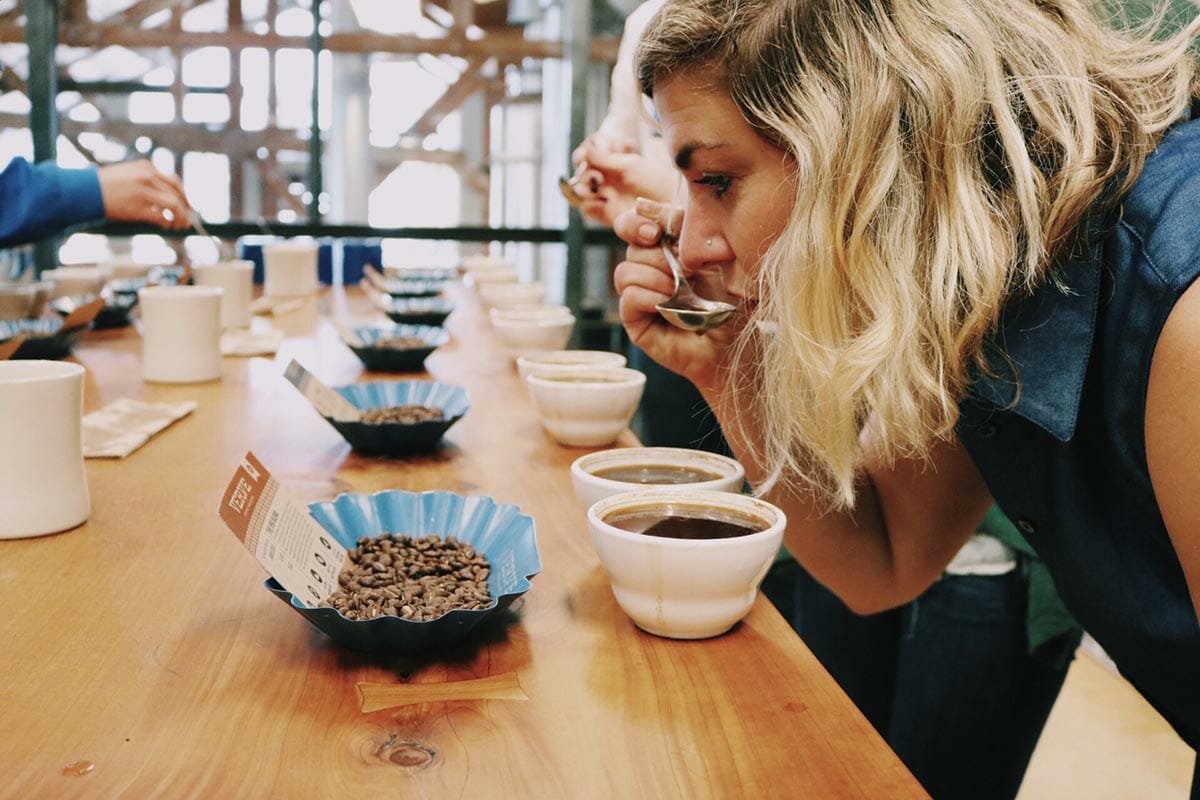
The Flavor Wheel
Created by the Specialty Coffee Association, it's the most complete tool for identifying flavors in coffee
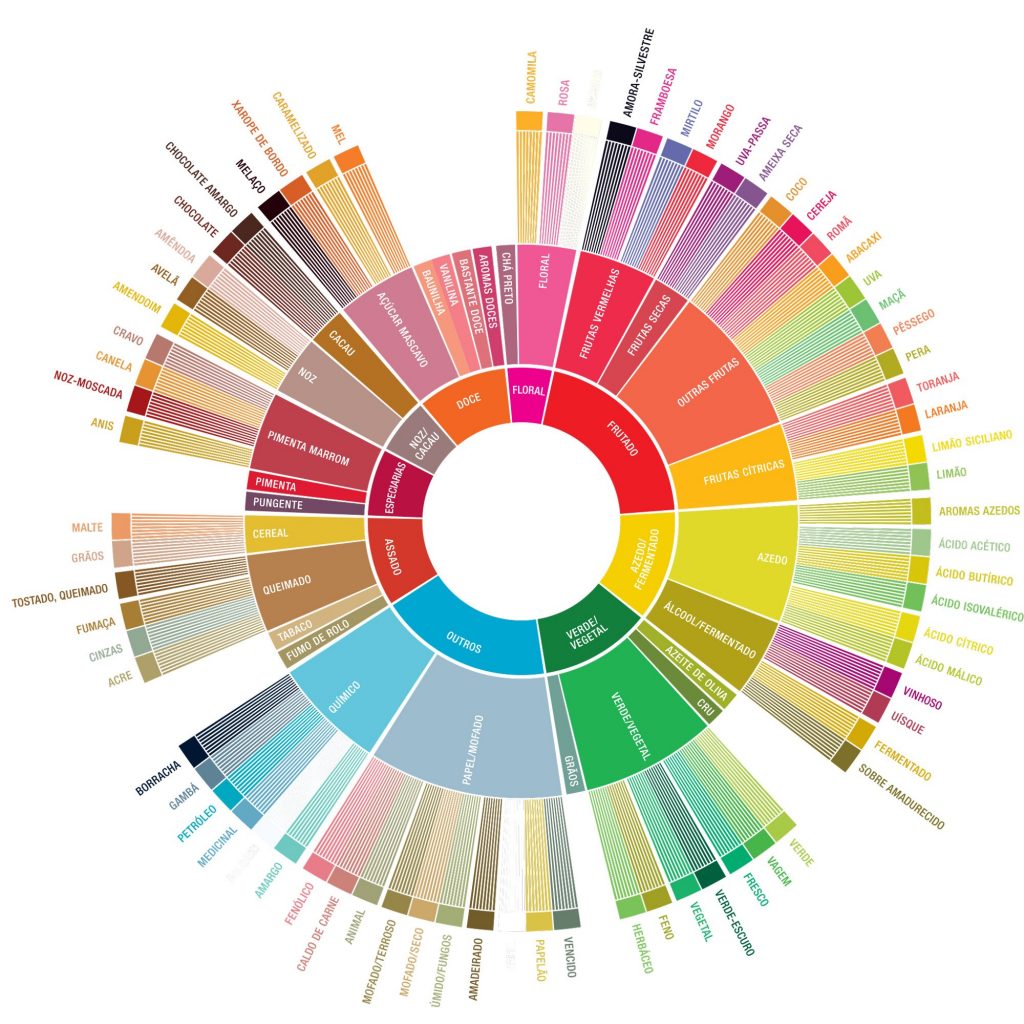
Coffee Taster's Flavor Wheel © SCA & WCR (2016 update)
A Scientific and Collaborative Tool
The wheel was developed through the largest collaborative research ever conducted in the coffee industry, involving scientists, sensory experts, and professional tasters from World Coffee Research and the Specialty Coffee Association.
Based on World Coffee Research's Sensory Lexicon, with 110 flavor, aroma and texture attributes, it allows evaluating from basic characteristics (sweet/bitter) to the most complex (honey/citric acid). It was the first complete update of the wheel in over 20 years!
Fun fact: The methodology was adapted from flavor wheels used by wine sommeliers, but expanded to capture the unique complexity of coffee.
How to Use the Wheel: The 3 Rings
First Ring (Center) - 9 Categories
Start here! These are the general flavor families. Identify which main group you perceive.
Ex: Sweet, Floral, Fruity, Sour/Fermented, Green/Vegetative, Roasted, Spices, Nutty/Cocoa, Other
Second Ring - 28 Aspects
More specific! Here you refine the category. If you identified "Fruity," now discover which type.
Ex: If Fruity → Red fruits, Dried fruits, Citrus, or Other fruits?
Third Ring (Outer) - 75 Descriptors
The most detailed! Here you arrive at the exact flavor you perceive.
Ex: If Citrus → Orange, Lemon, Grapefruit, or Meyer lemon?
Remember: There's no right or wrong! What you perceive is valid. The wheel is a vocabulary reference, not a skill test.
Fruity
Red fruits, citrus, tropical
Floral
Flowers, perfumed, delicate
Sweet
Caramel, honey, chocolate, brown sugar
Nutty / Cocoa
Almond, hazelnut, cocoa, chocolate
Spices
Cinnamon, clove, pepper
Roasted
Toasted, smoky, wood
Green / Vegetative
Grass, herbs, green
Prepare and taste the coffee
You take your first taste. Pay attention to the overall flavor. You notice something reminiscent of sweet and vibrant fruits.
First Ring - Identify the general category
You look at the first ring and identify: it's FRUITY! It's not floral, not chocolate, it's definitely fruit.
Second Ring - Refine the type of fruit
Within "Fruity," you need to choose: Red fruits? Dried? Citrus? Other? You notice it reminds you of strawberries and blueberries - they're RED FRUITS!
Third Ring - Be super specific
In the outer ring of red fruits you see: strawberry, raspberry, blackberry, blueberry, cherry... Tasting again, you can clearly identify STRAWBERRY and BLUEBERRY!
Congratulations! You just used the Flavor Wheel!
Now you can write: "This Ethiopian coffee has notes of strawberry and blueberry" and understand exactly where that description came from.
How to Develop Your Palate
Identifying flavors is a skill that develops with practice
When eating fruits, chocolate, nuts, pay active attention to the flavor. Your brain will create a database of references.
- Smell fresh fruits before eating
- Try different types of chocolate
- Taste spices and aromatic herbs
The best way to train is to taste coffees side by side, from different origins and processes.
- Prepare two different coffees together
- Note the differences you perceive
- Use the flavor wheel as a reference
What you need:
- ✓2-3 different coffees
- ✓Small cups or glasses
- ✓Tablespoon
- ✓Paper and pen for notes
How to do it:
- 1.Place 10g of medium ground coffee in each cup
- 2.Smell the dry grounds of each and note what you perceive
- 3.Add 150ml of hot water (90-95°C)
- 4.Wait 4 minutes, break the crust and smell
- 5.Use the spoon to taste, slurping some air
- 6.Note flavors, acidity, body, and sweetness
Tips for Beginners
Practical advice to start your journey
Let's learn more?