
Grinding
The most important (and most underrated) brewing variable. Learn to choose, adjust and understand your grind.
Why Grind Size Matters So Much
Grinding coffee increases the contact area between the bean and the water. The finer the grind, the faster compounds are extracted and the more resistance the water meets on its way through.
Each method has a different contact time, so each one needs a different grind. Espresso, at 25-30 seconds, needs fine grounds. A French press, with a 4-minute steep, calls for a coarse grind.
Even more important than size is uniformity: very different particles extract at different rates, and the cup ends up bitter and sour at the same time. That is where a good grinder makes the difference.
Grind Size by Method
Use it as a starting point and adjust by taste.
| Method | Grind | Looks like | Contact time |
|---|---|---|---|
| Turkish coffee | Extra-fine | Powder / flour | 2-3 min (boil) |
| Espresso | Fine | Powdered sugar to fine salt | 25-35 s |
| Moka pot | Fine to medium-fine | Fine salt | 3-5 min |
| AeroPress | Fine to medium | Fine salt to table sugar | 1-3 min |
| Siphon | Medium-fine | Table sugar | 1-1:30 min |
| V60 / Kalita | Medium-fine to medium | Granulated sugar | 2:30-3:30 min |
| Cloth filter / Clever | Medium | Granulated sugar / sand | 3-4 min |
| Chemex | Medium-coarse | Coarse sand | 4-5 min |
| French press | Coarse | Coarse salt | 4 min |
| Cold brew | Extra-coarse | Cracked pepper | 12-24 h |
Grinder numbers are not universal: "15" on one grinder is not "15" on another.
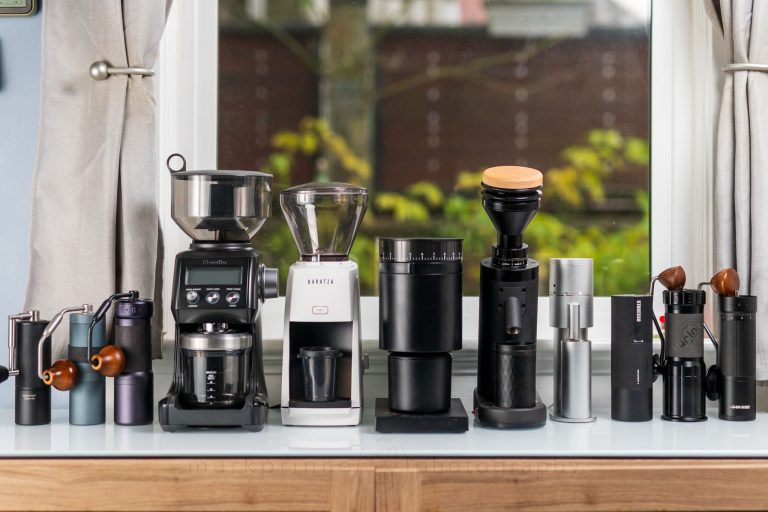
Types of Grinders
A grinder is probably the best investment to improve your coffee at home.
Blade
Spinning blades that chop the bean. Cheap, but very uneven, with big chunks and lots of fines.
Avoid for specialty coffee.
Conical Burr
A cone-shaped burr turns inside a ring. Common in hand grinders and entry to mid-level electric grinders.
More body and great versatility.
Flat Burr
Two parallel discs. They tend to produce more uniform particles and very clear cups.
Common in high-end and café grinders.
Hand Grinder
Great grind quality for the price, quiet and portable. Takes a few seconds of arm work.
Ideal for 1-2 cups at a time.
Electric
Convenient for daily brewing and larger volumes. Good models cost more than equivalent hand grinders.
Ideal for espresso and daily brewing.
Single Dose
Grinders designed to grind just the dose you need, with low retention between brews.
Great if you switch coffees often.
How to Dial In Your Grind
- 01
Start With the Chart
Pick the grind suggested for your method and brew the standard recipe without changing anything else.
Tip: Write down the setting. Having a starting point saves coffee.
- 02
Taste Carefully
Sour, thin, salty or lacking sweetness? Under-extraction. Bitter, drying and astringent? Over-extraction.
Tip: Let the cup cool a bit: flaws show up more when it is warm.
- 03
Adjust in Small Steps
Under-extracted: grind finer. Over-extracted: grind coarser. Change one or two clicks at a time.
Tip: Change only one variable per brew so you know what caused the difference.
- 04
Check the Time
Total brew time follows the grind. If it changed noticeably, you are on the right track.
Tip: Very fresh coffee releases more gas and may need a slightly coarser grind.
Tips From Daily Grinders
Grind fresh
Ground coffee loses much of its aroma within 15-30 minutes. Whole beans last for weeks.
Fines and uniformity
Very fine particles (fines) clog filters and add bitterness. Sieves can help for filter methods.
Static
A drop of water on the beans before grinding (the RDT technique) reduces mess and retention.
Cleaning
Brush the burrs regularly. Built-up rancid oils pass their taste into the coffee.
Retention
Grinders hold some grounds between uses. With electric grinders, purge the first grams after changing the setting.
Adjust while running
Many manufacturers recommend going finer with the grinder running so the burrs don't jam. Check your manual.
Golden Rule
If you can only invest in one piece of equipment, make it the grinder. A specialty coffee ground on a good grinder and brewed with a simple filter beats the same coffee ground with blades and brewed on the most expensive gear.
Glossary Terms
See full glossary →- Burr Grinder
- A grinder that uses two abrasive surfaces to crush coffee uniformly, producing consistent particle sizes essential for good extraction.
- Extraction
- The process of dissolving soluble compounds from coffee grounds into water. Ideal extraction yield is 18–22%.
- Over-extraction
- Extracting too many solids from the coffee, resulting in harsh, dry, bitter, or astringent flavors.
- Under-extraction
- Too little dissolved from the coffee, resulting in sour, salty, thin, or grassy flavors.
Let's learn more?